Porträt des Doktor Felix Rey
Vincent van Gogh · 1889
.jpg)
Van Gogh painted this portrait as a thank-you to the doctor who treated him. The doctor's family reportedly used it to patch a hole in a chicken coop.
The story behind the painting
In December 1888, in Arles, Van Gogh suffered the crisis, described in the sources as a fit of epilepsy or dementia, in which he cut off part of his ear. At the town hospital he was cared for by a young doctor, Félix Rey. Van Gogh left hospital on 7 January 1889, and this portrait was probably painted between that date and 17 January, when a letter to his brother Theo mentions giving the work to its subject as a keepsake. It was, in other words, a gift of gratitude from a recovering patient to the man who had helped heal him. The canvas is signed in red and inscribed with the place and month: Arles, January 1889. It is a rare document of a fragile, hopeful moment in the artist's life.
What to look for
The portrait is a fairly modest canvas, about 64 by 53 centimetres. An early description of it, used when it passed through the art trade, reads simply: a portrait of a man, full face, turned slightly to the right, signed in red with the words Vincent, Arles, January 1889. Begin there, with the doctor's face meeting you almost head-on, then look for that red signature. The sources describe the picture as showing the 'Japanising' style Van Gogh practised in this period, a manner shaped by his admiration for Japanese prints, which favoured clear outlines, flat areas of strong colour and decorative patterning. As you look, notice how much of the picture's energy comes not from deep shadow or modelling but from colour and pattern set boldly side by side.
Meaning and intent
Van Gogh meant this painting as a personal gift, a keepsake for the doctor who had treated him. Its meaning lies first in that relationship: the artist offering the one thing he could truly give, his art, to someone who had cared for him at his lowest point. Yet the gift was not received as he might have hoped. According to the sources, Rey and his family found the portrait ridiculous and unrealistic. The bold, Japanese-inspired style that we now admire looked, to them, simply wrong as a likeness. That gap between the painter's vision and his sitter's taste is part of the picture's poignancy. It reminds us how radical Van Gogh's way of seeing was in his own time, even to the people closest to his daily life.
Legacy
The portrait's afterlife is extraordinary. The Rey family reportedly used it for over ten years to block a hole in a chicken coop, then probably stored it in their loft. In 1901 the young painter Charles Camoin, posted to Arles with the army, met Rey, heard about the picture and acquired it; it then passed to a dealer in Marseille and on to Ambroise Vollard in Paris. After further sales through the Cassirer gallery in Berlin and Eugène Druet in Paris, it was bought in 1908 by the Russian collector Sergei Shchukin. Seized by the Soviet state after the October Revolution, it lost its sitter's name until the scholar Jacob Baart de la Faille reidentified Rey in 1924. Today it hangs in the Pushkin Museum in Moscow.
Schon gewusst?
- The portrait was probably painted between 7 and 17 January 1889, just after Van Gogh left hospital in Arles.
- Rey's family reportedly used the canvas for over ten years to patch a hole in a chicken coop.
- The painter Charles Camoin acquired it from Rey in 1901 while serving in the army at Arles.
- The sitter's identity was forgotten until Jacob Baart de la Faille identified him again in 1924.
Über den Künstler
Vincent van Gogh (1853-1890)
Porträt · Mann · Puschkin-Museum
Mehr von Vincent van Gogh
 Die Sternennacht - Vincent van Gogh (1889)
.jpg) Caféterrasse am Abend - Vincent van Gogh (1888)
Caféterrasse am Abend - Vincent van Gogh (1888) Sonnenblumen - Vincent van Gogh (1888)
 Mandelblüte - Vincent van Gogh (1890)
 Weizenfeld mit Raben - Vincent van Gogh (1890)
 Das Schlafzimmer - Vincent van Gogh (1888)
 Die Kartoffelesser - Vincent van Gogh (1885)
 Schwertlilien - Vincent van Gogh (1889)
Werke verwandter Künstler
 Woher kommen wir? Wer sind wir? Wohin gehen wir? - Paul Gauguin (1897-1898)
%201889.jpg) Der gelbe Christus - Paul Gauguin (1889)
Der gelbe Christus - Paul Gauguin (1889) Das Frühstück im Grünen - Édouard Manet (1863)
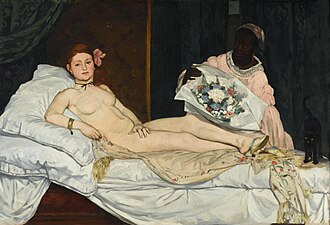 Olympia - Édouard Manet (1863)