Porträt eines jungen Mannes mit goldener Kette
Rembrandt van Rijn · 1635
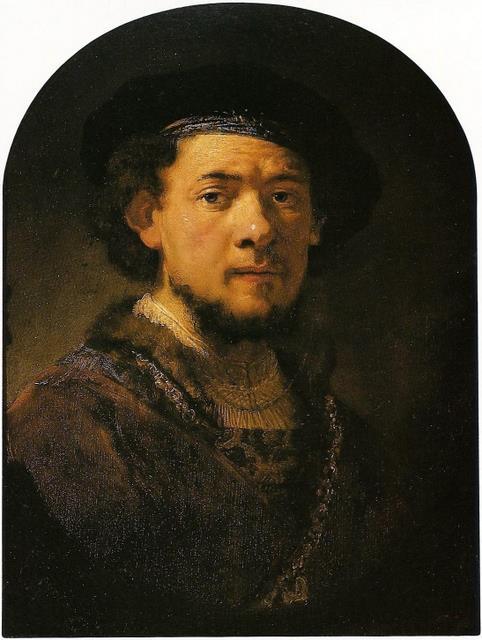
A young man in a dark cap looks straight at us, a gold chain falling in a V across his chest. For centuries he was Rembrandt himself. Today experts still argue about who he is, and even about who painted him.
The story behind the painting
The panel is signed and dated 1635 and was long known as Self-Portrait with a Gold Chain. Its link to Rembrandt goes back to the 17th century: Ferdinand Bol, a direct pupil, reproduced it, and at least three 18th-century prints by Pieter van Bleek, Murray and Johann Georg Hertel II carry the words Rembrandt pinxit, Rembrandt painted it. Writers such as John Smith in 1836 and Carel Vosmaer in 1877 called it one of his masterpieces. Today it is in the São Paulo Museum of Art.
What to look for
The young man stares directly at the viewer, with a reserve and a distant melancholy in his face. He stands out against a neutral background in which the light plays across a single colour. A gold chain forms a V around his neck and hangs down his chest; he wears a black cap and a heavy woven shawl. The shape of the picture is unusual, and copies suggest it was once rectangular and a little larger. It is in poor condition, and a signature, Rembrandt, can be read on his right shoulder only under infrared light.
Meaning and intent
Was it a self-portrait? In 1966 Kurt Bauch doubted it and preferred a neutral title, Young Man in Rich Costume. Horst Gerson, Paolo Lecaldano and Christopher Wright followed. In 1989 the Rembrandt Research Project went further and gave the work to the circle of Rembrandt, not the master. Pietro Maria Bardi rejected that verdict and called the portrait a masterpiece. Luiz Marques also defended Rembrandt's authorship, yet judged it extremely unlikely to be a self-portrait. The face we meet, then, may belong to an unknown sitter, painted by a hand still under debate.
Legacy
Whatever its author, the portrait travelled far in art. William Hogarth used it as inspiration for his 1755 Portrait of John Pine, now in the Beaverbrook Art Gallery in Fredericton, Canada. Many copies exist; Christopher Wright singled out one of higher quality, with different garments, seen on the Amsterdam market in the 1960s and now lost. The Frick Collection and Simon Schama are among those who rejected the 1989 decision, and the Research Project itself later restored several circle works to Rembrandt in 2005. The young man keeps his secret and his steady gaze.
Schon gewusst?
- Signed and dated 1635.
- Long called a self-portrait; this is now widely doubted.
- Given to the circle of Rembrandt in 1989, a verdict many experts dispute.
- Inspired Hogarth's Portrait of John Pine (1755).
Über den Künstler
Rembrandt van Rijn (1606-1669)
Mann · Niederländisches Goldenes Zeitalter der Malerei · Selbstbildnis · Rembrandt van Rijn · Charles Sedelmeyer collection · Museu de Arte de São Paulo
Mehr von Rembrandt van Rijn
 Die Nachtwache - Rembrandt van Rijn (1642)
 Selbstbildnis - Rembrandt van Rijn (1659)
 Die Anatomie des Dr. Tulp - Rembrandt van Rijn (1632)
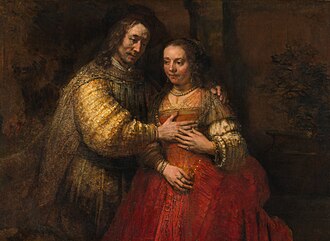 Die Judenbraut - Rembrandt van Rijn (1660s)
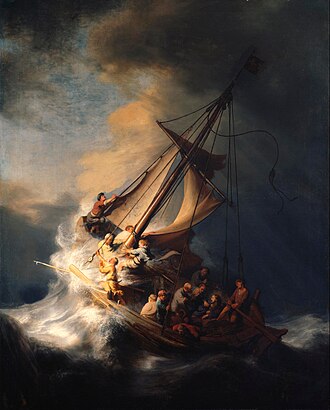 Der Sturm auf dem See Genesareth - Rembrandt van Rijn (1633)
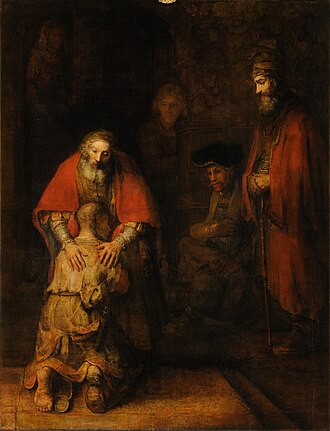 Die Rückkehr des verlorenen Sohnes - Rembrandt van Rijn (1668)
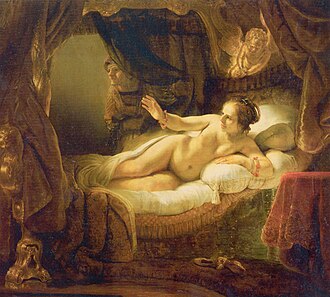 Danaë - Rembrandt van Rijn (1636)
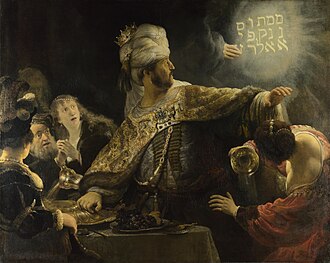 Das Gastmahl des Belsazar - Rembrandt van Rijn (1636)
Werke verwandter Künstler
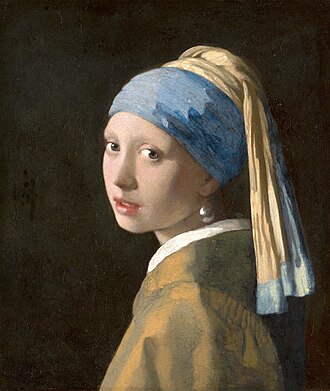 Das Mädchen mit dem Perlenohrgehänge - Johannes Vermeer (1665)
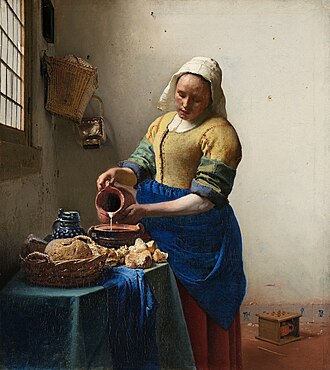 Dienstmagd mit Milchkrug - Johannes Vermeer (c. 1658)