Pallas Athene
Rembrandt van Rijn · 1655
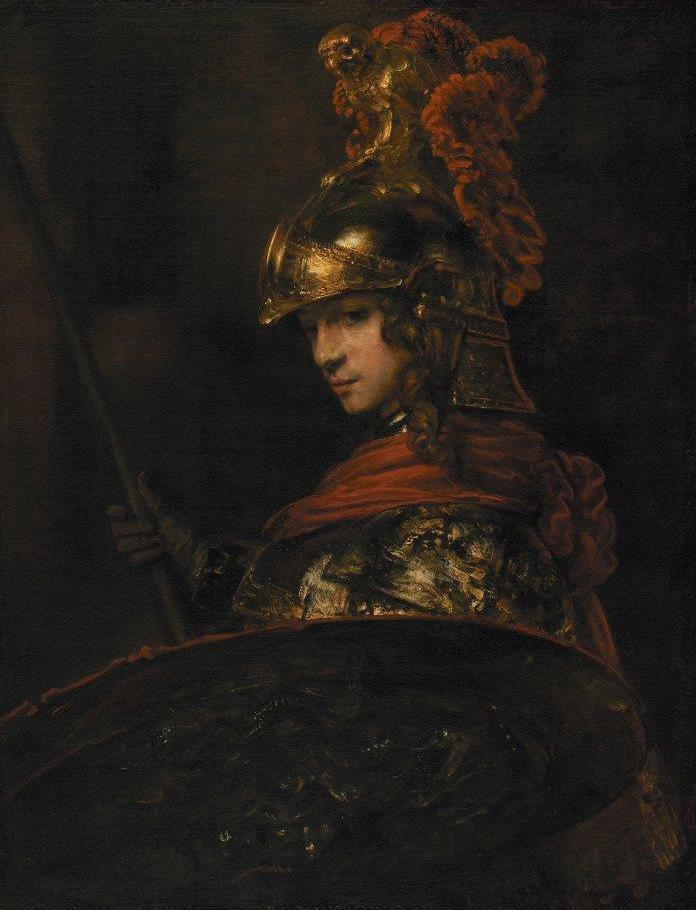
A figure in black armour turns in profile, long curls falling from a feathered helmet, a great round shield at the arm. Is it the goddess Athena, Alexander the Great, or Rembrandt's own son in costume? Scholars still cannot agree.
The story behind the painting
Wikipedia dates the painting both to c. 1657 and, more generally, to around 1655, with some scholars placing it in the late 1650s; Wikidata gives 1655. Its origins are unknown. A print of Pallas Athena in a 1659 wedding parade, for Countess Henriette Catherine of Nassau and John George II of Anhalt-Dessau, shows a very similar pose and costume. The goddess there was played by Rembrandt's son Titus, which has led to the idea that Rembrandt based the picture on Titus and that Titus may have posed. The iconography may come from Wenceslaus Hollar's 1646 engravings of the Greek gods.
What to look for
Rembrandt paints a bust seen from the side. The figure wears black armour and a Macedonian-style helmet with red feathers, a red cloak around the neck, a spear in the gloved right hand and a large round shield in the left. Look for the clues: the shield bears the head of Medusa, which marks it as the aegis, Athena's shield, and the helmet carries an owl, her symbol. The lower and left parts of the canvas have been cut away, so the composition we see today was once larger.
Meaning and intent
Its subject has long been debated. John Smith saw a warrior in the style of Alexander the Great; Somov named Pallas Athena, Hofstede de Groot Minerva, and Rosenberg and Valentiner Mars. From the 1960s many argued for Rembrandt's lost Alexander made for the Sicilian collector Antonio Ruffo, since Alexander and Athena were often confused. But Ruffo's picture was still in Messina in 1783, while this one was in a Paris collection in 1780, which argues against that theory. A recent idea links it with a Venus in the Louvre and a Juno in the Hammer Museum as a trilogy, perhaps for the dealer Herman Becker.
Legacy
The first certain owner was the French collector Count Baudouin, whose collection Catherine the Great bought in 1780 or 1781. She gave the picture to Alexander Lanskoy, and it later passed to the Hermitage. In 1930 the Soviet state sold it through Antikvariat to Calouste Gulbenkian, and it is now in the Calouste Gulbenkian Museum in Lisbon. Its authorship has also been questioned: since 1991 some scholars have suggested a pupil, and in 2006 Ernst van de Wetering proposed Rembrandt with a studio assistant, a view now generally accepted. The Netherlands Institute for Art History attributes it to Rembrandt and his workshop.
Schon gewusst?
- Dated around 1655 to 1657.
- Owned by Catherine the Great, then the Hermitage.
- Now in the Calouste Gulbenkian Museum, Lisbon.
- Now generally given to Rembrandt with a studio assistant.
Über den Künstler
Rembrandt van Rijn (1606-1669)
Niederländisches Goldenes Zeitalter der Malerei · Eremitage · Historienmalerei · Athene
Mehr von Rembrandt van Rijn
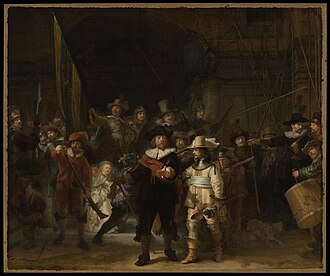 Die Nachtwache - Rembrandt van Rijn (1642)
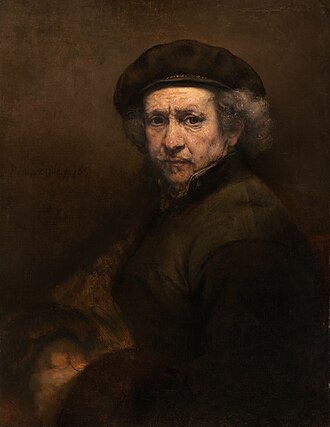 Selbstbildnis - Rembrandt van Rijn (1659)
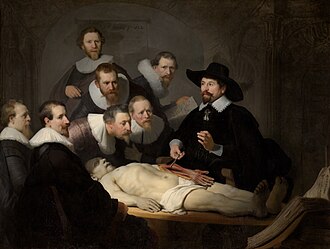 Die Anatomie des Dr. Tulp - Rembrandt van Rijn (1632)
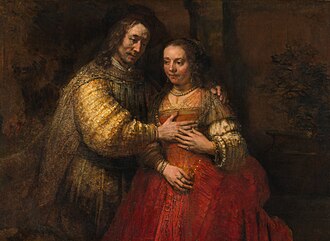 Die Judenbraut - Rembrandt van Rijn (1660s)
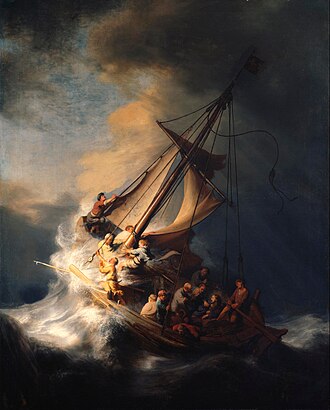 Der Sturm auf dem See Genesareth - Rembrandt van Rijn (1633)
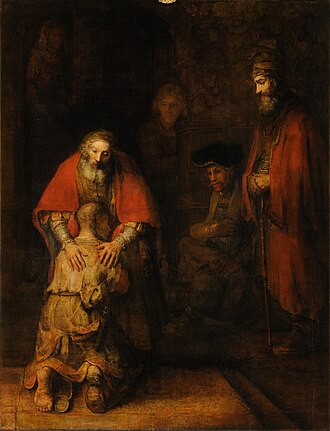 Die Rückkehr des verlorenen Sohnes - Rembrandt van Rijn (1668)
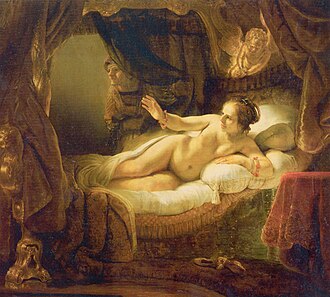 Danaë - Rembrandt van Rijn (1636)
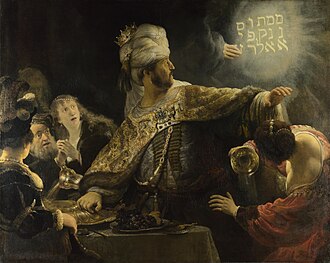 Das Gastmahl des Belsazar - Rembrandt van Rijn (1636)
Werke verwandter Künstler
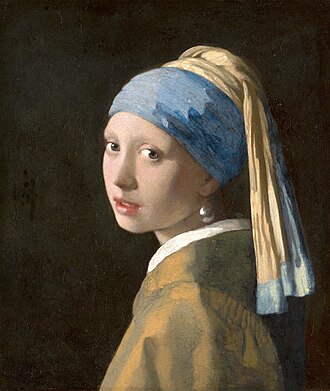 Das Mädchen mit dem Perlenohrgehänge - Johannes Vermeer (1665)
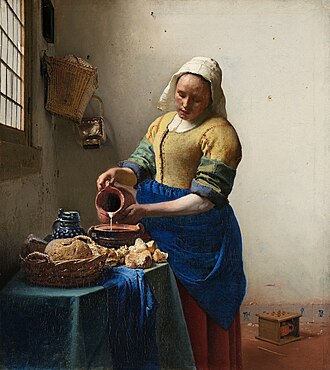 Dienstmagd mit Milchkrug - Johannes Vermeer (c. 1658)