Ein Christus nach dem Leben
Rembrandt van Rijn · 1640s
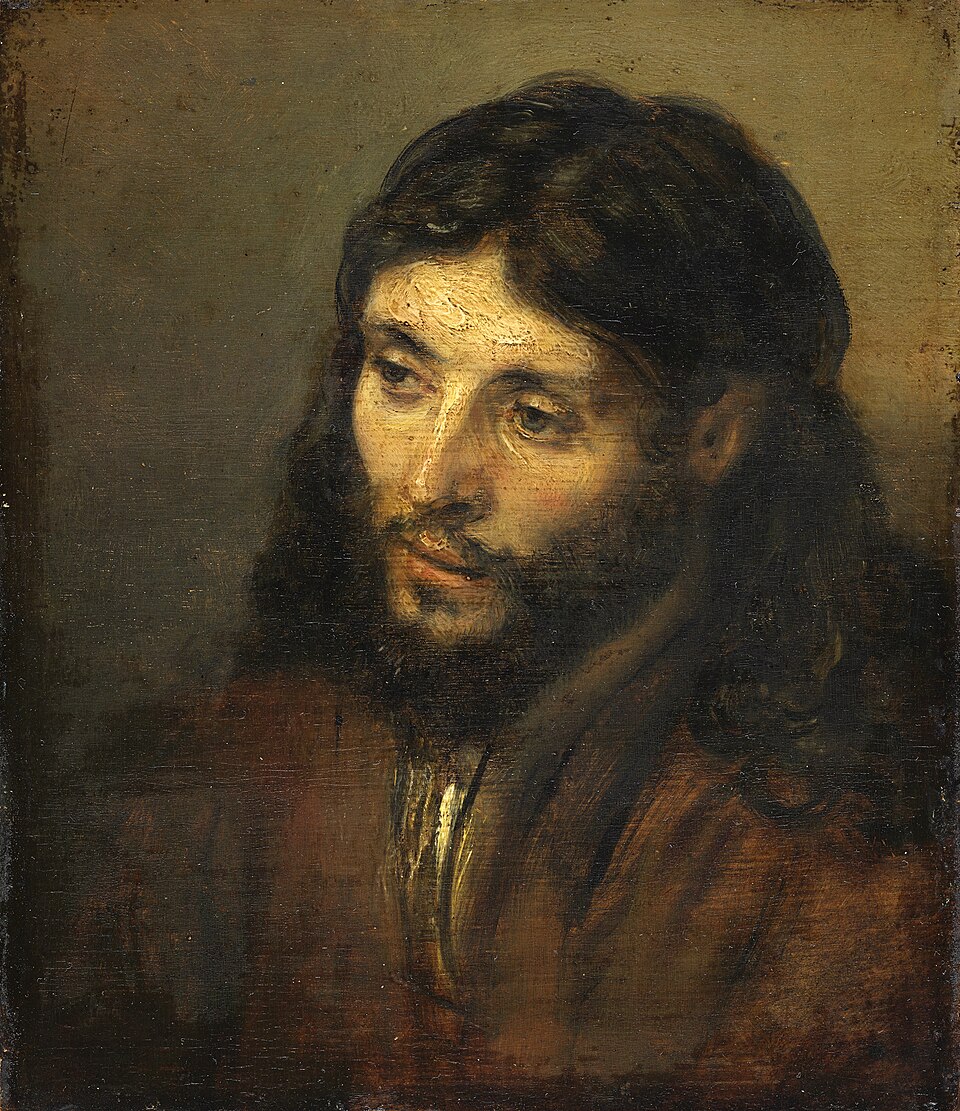
Of about a dozen similar heads of Christ, this small Berlin panel is the one the Rembrandt Research Project gives to the master himself. It survived a wartime vault and a theft.
The story behind the painting
Rembrandt painted several heads of Christ in varying poses, possibly as devotional objects, and about a dozen are known. In the nineteenth century people supposed they were based on a Jewish model, which led some to think Rembrandt himself was Jewish, since he lived in what was considered Amsterdam's Jewish quarter. Wikipedia dates this oil on panel to 1648, Wikidata to the 1640s, while Hofstede de Groot in 1914 thought it painted about 1656 to 1658. It passed through the John Henderson sale in London in 1882 and the Rodolphe Kann collection in Paris.
What to look for
Hofstede de Groot described it as turned three-quarters to the left, the head slightly inclined, with long dark curls and a short full beard, in a reddish-brown cloak, half-length without the hands, about half life size. It is small, about 25 by 21.7 cm on oak. Look at the gentle tilt of the head and the softness of the face: this is not a triumphant Christ in glory, but a quiet, human presence, painted close enough to feel like a real person sitting for the artist.
Meaning and intent
These heads were possibly made for private devotion, offering a face to pray before. Among all the versions, this one stands apart: only it is considered by the Rembrandt Research Project to be by the master himself, and in their catalogue it recently gained its status as the only surviving version by his hand. It is still linked to Rembrandt's workshop and grouped with the others. The idea that the heads came from a Jewish model belongs to nineteenth-century opinion as reported by the source, not to settled fact.
Legacy
The Kann collection was bought whole in 1907 by Duveen Brothers, and the painting reached the Kaiser Friedrich Museum in Berlin as a gift from Herr and Frau Martin Bromberg of Hamburg. During the Second World War it was stored in a vault with most of that museum's paintings, and after the war it returned to West Berlin and the Gemäldegalerie. In 1959 it was stolen, then recovered two years later. It was number 35 in the 2011 to 2012 exhibition Rembrandt and the Face of Jesus in Detroit, Philadelphia and Paris.
Schon gewusst?
- The only head of Christ the Rembrandt Research Project gives to Rembrandt himself.
- Dated 1648 by Wikipedia, the 1640s by Wikidata.
- Stolen in 1959 and recovered two years later.
- Now in the Gemäldegalerie, Berlin.
Über den Künstler
Rembrandt van Rijn (1606-1669)
religiöse Kunst · Porträt · Mann · Jesus Christus · Niederländisches Goldenes Zeitalter der Malerei · Gemäldegalerie Berlin
Mehr von Rembrandt van Rijn
 Die Nachtwache - Rembrandt van Rijn (1642)
 Selbstbildnis - Rembrandt van Rijn (1659)
 Die Anatomie des Dr. Tulp - Rembrandt van Rijn (1632)
 Die Judenbraut - Rembrandt van Rijn (1660s)
 Der Sturm auf dem See Genesareth - Rembrandt van Rijn (1633)
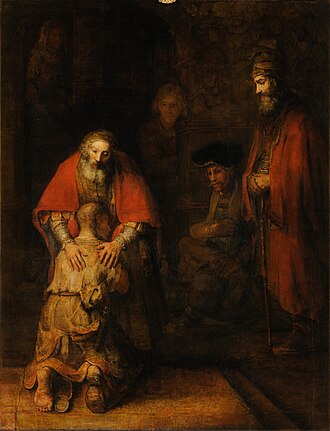 Die Rückkehr des verlorenen Sohnes - Rembrandt van Rijn (1668)
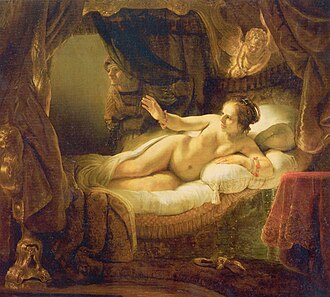 Danaë - Rembrandt van Rijn (1636)
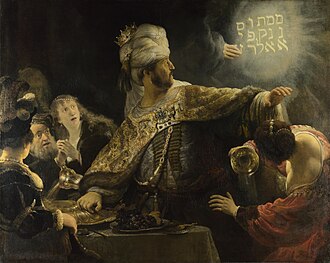 Das Gastmahl des Belsazar - Rembrandt van Rijn (1636)
Werke verwandter Künstler
 Das Mädchen mit dem Perlenohrgehänge - Johannes Vermeer (1665)
 Dienstmagd mit Milchkrug - Johannes Vermeer (c. 1658)
 Fest des hl.Nikolaus - Jan Steen (1660s)
 Mädchen mit Austern. - Jan Steen (1658)
 Ein Schütze einen Berkemeyer haltend, bekannt als „Der fröhliche Trinker" - Frans Hals (1620s)
 Der lachende Kavalier - Frans Hals (1624)
 Die Mühle von Wijk - Jacob van Ruisdael (1670)
 Judenfriedhof - Jacob van Ruisdael (1650s)
 Hof eines Hauses in Delft - Pieter de Hooch (1658)
 A Woman Peeling Apples - Pieter de Hooch (1663)